Digital-Marketing
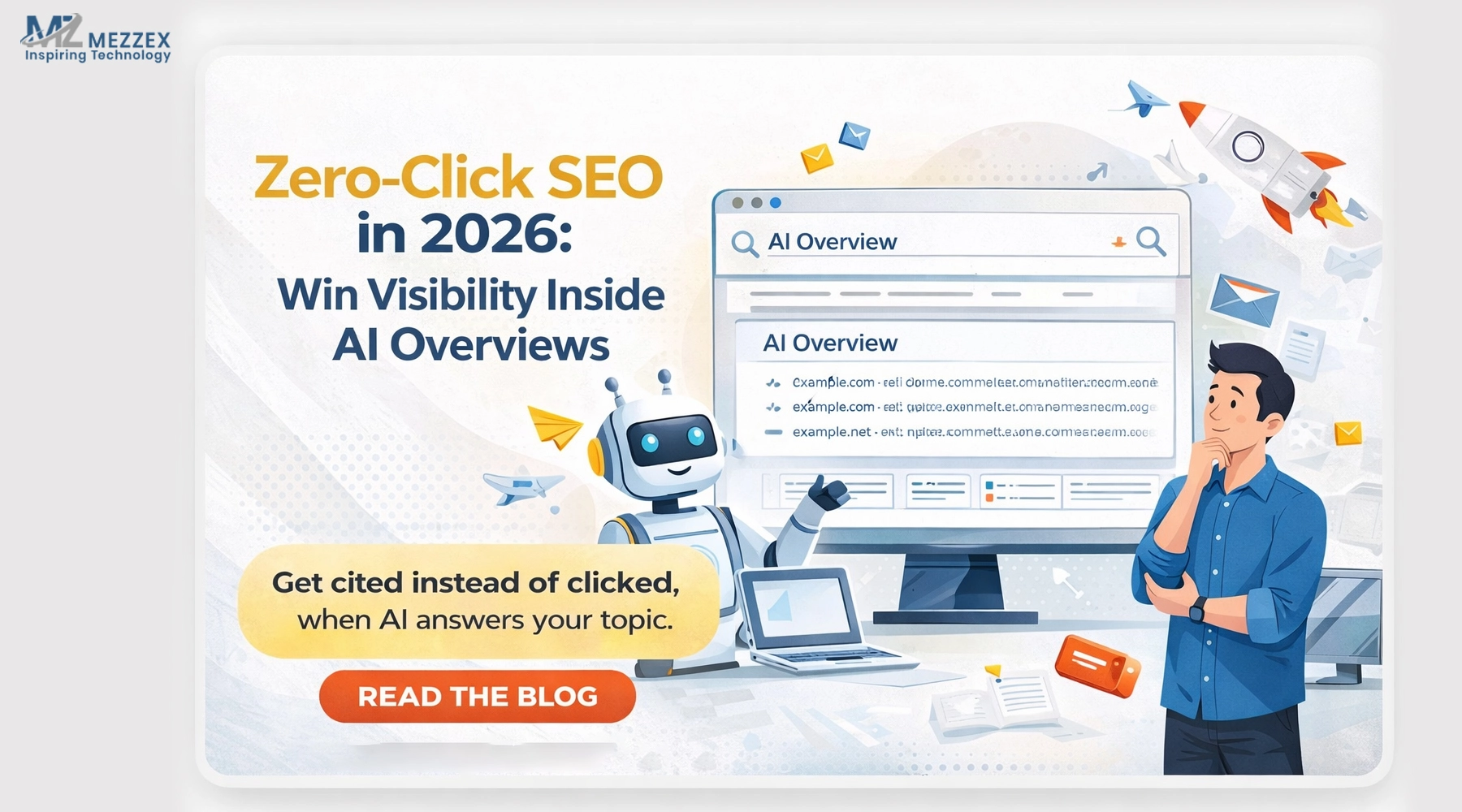
Zero-click SEO in 2026: win visibility inside AI Overviews
AI Overviews change how people get answers. In 2026, many searches end on the results page because the overview provides the steps, summary, or recommendation. That shift does not remove SEO. It changes the job. You still need pages that Google can trust and reuse, even when the user does not click. Zero-click SEO focuses on earning mentions and citations inside AI Overviews. This blog demonstrates how to optimise pages for reuse, track visibility without requiring clicks, and continually improve your brand's visibility. You get practical steps you can apply to pages across your site right now.
What “zero-click” means inside AI Overviews in 2026
- Define zero-click as visibility without a visit, when AI Overviews answer the query and reference sources in SERP.
- Treat visibility as inclusion signals: your brand name, your page cited, or your phrasing reused in the overview.
- Focus on queries that trigger overviews: definitions, how-to steps, troubleshooting, comparisons, and quick recommendations tied to intent.
- Accept that click volume falls for many queries, then aim for repeated mention so users remember you and search later.
- Keep the page narrow: one clear problem, one clear audience, one clear outcome, so Google can reuse content cleanly.
Define the right success metrics for AI Overview visibility
- Use Search Console to track impressions and query themes where clicks drop, since overviews often satisfy intent on-page.
- Log AI Overview appearances: query, date, overview text, and your outcome (cited, paraphrased, mentioned, or absent).
- Save screenshots of overviews, so you can track citations and wording changes without guesswork.
- Track branded searches and direct visits as assisted impact, since overview exposure often shifts demand to later sessions.
- Measure on-page engagement for clickers: time, scroll depth, and conversion actions that show the page meets intent.
- Review the same query set monthly, so you can compare like-for-like and avoid noise from random changes.
Structure content, so AI Overviews can lift clean answers
- Start each section with a direct answer line, then add short support sentences that clarify scope, limits, and next action.
- Use steps and short lists where they fit, since AI Overviews summarise structured blocks more reliably than long paragraphs.
- Define key terms once and keep wording consistent, so extraction stays stable and the summary stays accurate.
- Add practical artefacts: checklists, decision rules, and sample wording, so the overview can lift usable guidance.
- Remove repetition and filler lines, since extra sentences increase mis-summary risk and reduce quote-worthiness.
On-page trust signals that raise your chance of being referenced
- Make it clear who you are and what you do, because entity clarity helps Google connect advice to a real site.
- Show a simple process on-page, since structured delivery signals professionalism and reduces ambiguity for extraction.
- Keep claims grounded and avoid sweeping promises, since overviews tend to cite pages that stay precise and restrained.
- Use consistent navigation and service naming, so Google sees stable links between topics and your services.
- Keep contact options and business details visible, since transparency supports trust when the overview selects sources.
Technical groundwork that supports AI Overview inclusion
- Keep the page indexable and canonicalised, so Google can select it as a source without duplicate confusion.
- Optimise performance and mobile UX, because clickers still send engagement signals that support perceived usefulness.
- Use clean headings and a single H1, because a clear hierarchy helps extraction and keeps the overview aligned to intent.
- Add structured data only where it matches the content truthfully, since markup works best when it reinforces meaning.
- Strengthen internal links to related support pages, so crawlers understand topical coverage and page purpose.
- Keep templates consistent across similar pages, so Google reads patterns and assigns intent faster.
Build an “overview-first” content strategy that stays topic-locked
- Write pages that answer one intent fully, since overviews favour sources that resolve the question without side topics.
- Create supporting pages for sub-questions, then link back to the main guide, so each page stays reusable.
- Prioritise pages that already earn impressions, because they sit closer to inclusion and often need structure changes.
- Keep language practical and specific, so the overview can list steps and rules users can act on.
- Update sections that change fast, since overview triggers and phrasing shift and stale pages lose inclusion.
Monitoring and iteration workflow for AI Overview wins
- Run a monthly review of a fixed query list and record outcomes, so you track inclusion movement and wording shifts.
- Maintain a change log for edits, so you tie updates to new citations or improved summary alignment.
- Identify paragraphs that earn reuse, then replicate their structure across the page to increase lift-ready blocks.
- Cut sections that never influence inclusion, since lean pages reduce confusion and improve clean summarisation.
- Feed customer questions into your query list, because those queries often match prompts that trigger overviews.
Implementation plan with Mezzex: roles, delivery, and next steps
- Start with research and strategy, since the Mezzex process begins with goals, audience understanding, and environment review.
- Turn insights into page structure through design work, with a focus on intuitive interfaces that support fast comprehension.
- Build and test with clean, efficient code and quality assurance, so pages load well and communicate answers clearly.
- Deliver and improve post-launch, including training, support, analysis, and continuous improvement that keeps performance steady.
- Use Mezzex SEO for content and optimisation changes, and use development services when fixes require templates or functionality.
Get your AI Overview visibility plan
If you want steady visibility inside AI Overviews, align content, structure, and technical signals to the queries that trigger overviews in your niche. Mezzex supports that work across digital marketing and IT services, with a clear process: Research, Design, Building, and Delivery. You can contact us at info@mezzex.com or +44 121-6616357 to discuss goals, priority pages, and the quickest changes that improve reuse in AI Overviews. If you prefer, use the free consultation prompt on the site to start the conversation right away.