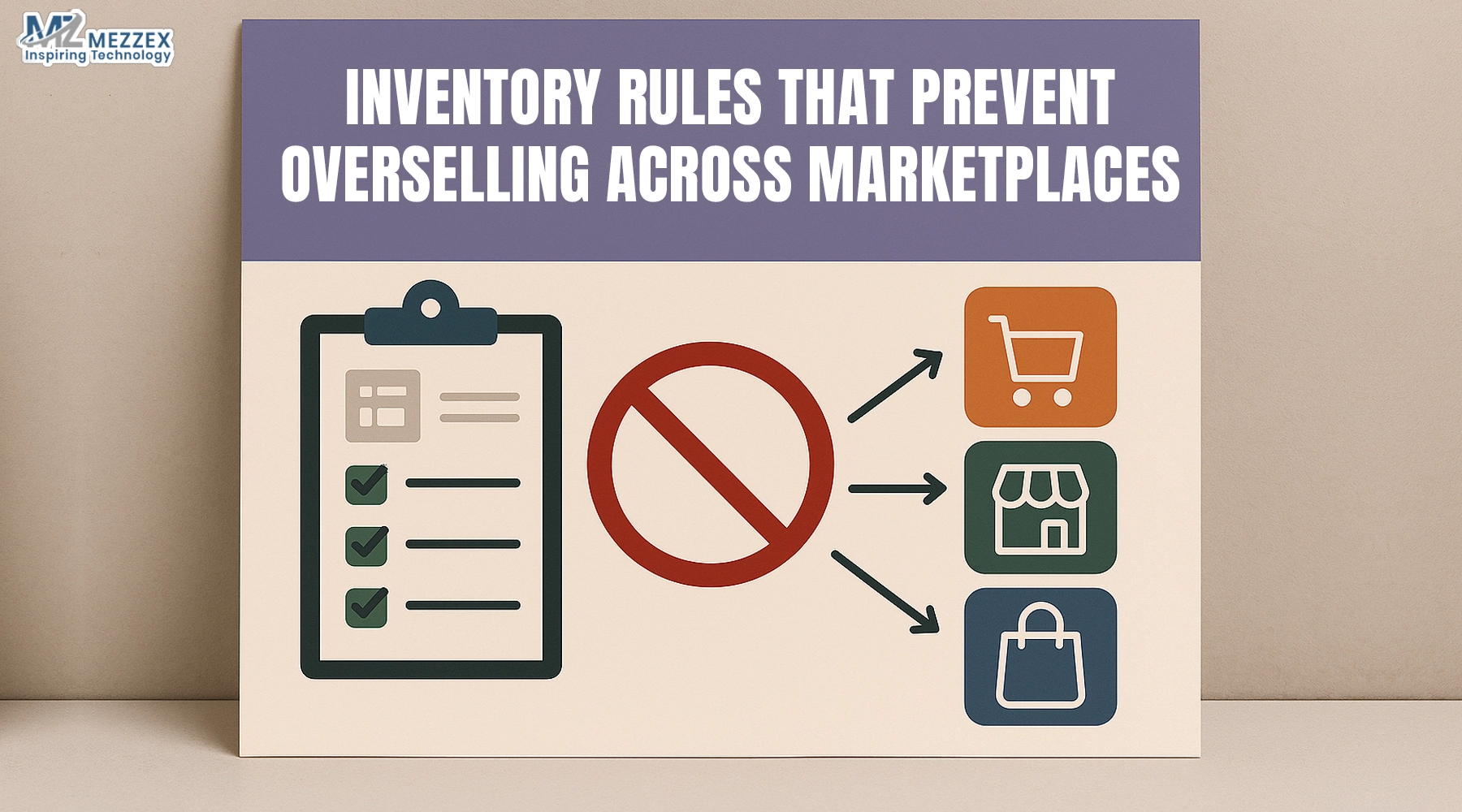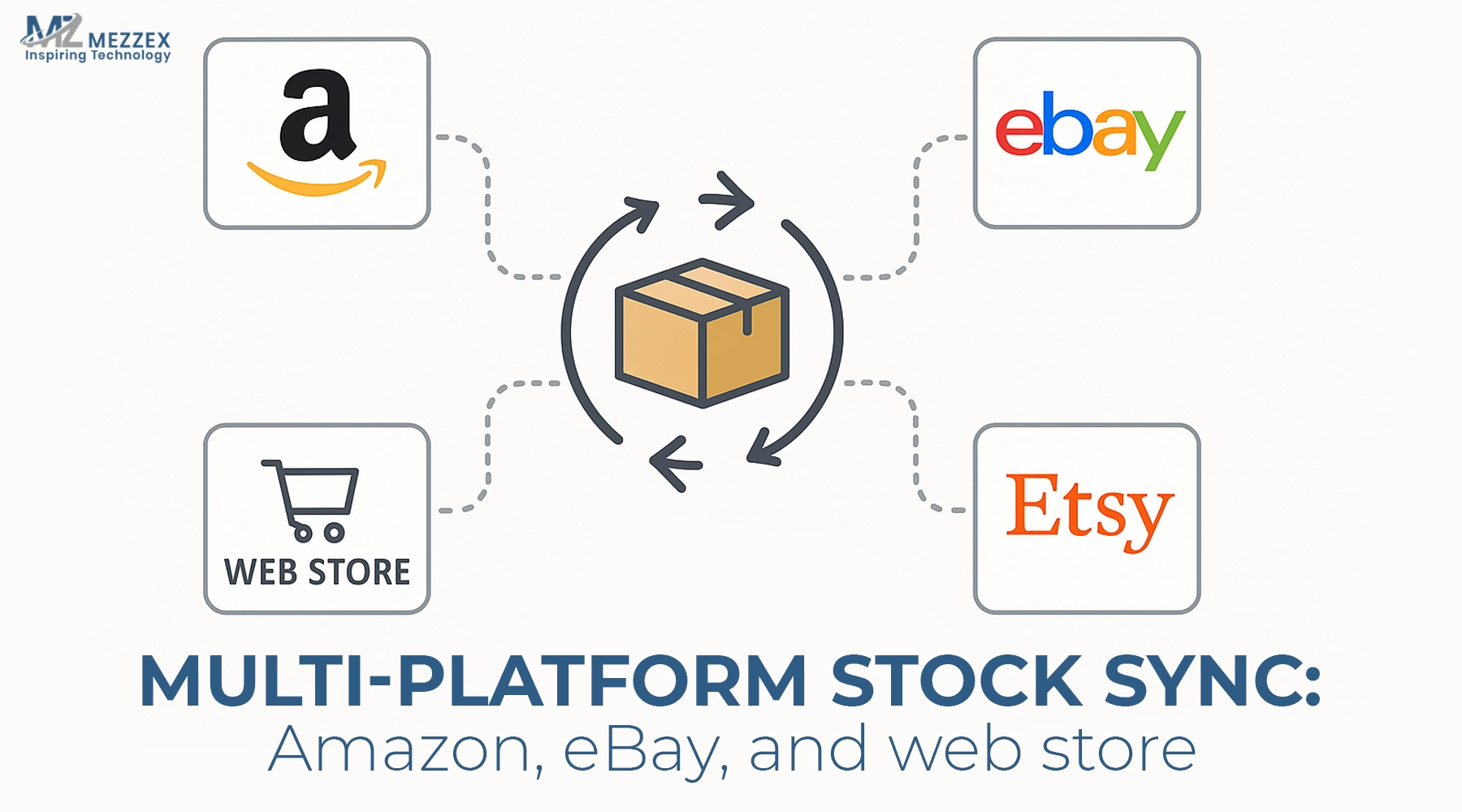
A customer places an order on Amazon during a flash sale. Seconds later, another shopper grabs the same SKU on your web store. At the same time, an eBay buyer checks out and expects next‑day delivery. If each channel uses its own stock count, you oversell, issue refunds, and watch ratings drop. When you run a proper multi‑platform stock sync, all three channels share one live inventory view, so every order reserves stock correctly. Multi‑channel ecommerce moves fast; your stock management must move faster. This on‑page guide shows how Amazon, eBay, and web store stock sync works and how Mezzex helps UK sellers set it up in a practical, scalable way.
What multi‑platform stock sync actually means
- Multi‑platform stock sync connects your Amazon, eBay, and web store accounts to a single inventory source of truth, so every sale updates stock for all channels in near real time.
- The central system tracks each SKU across every channel and stores one live quantity per product, including available, reserved, and incoming units.
- When a customer buys on Amazon, the sync engine records the order, reduces central stock, and pushes the new quantity to eBay and your web store before the next buyer sees the product.
- When you receive new stock into the warehouse or close a purchase order, the system increases the central quantity and updates Amazon, eBay, and your site together, so no channel lags.
- Multi‑platform stock sync also manages product status. When a line reaches zero or safety stock, the system can pause or limit listings on each marketplace to prevent overselling at peak times.
- For Mezzex clients, this central inventory often sits inside a custom or integrated stock layer that connects cleanly to Amazon, eBay, and major ecommerce platforms through secure APIs, so sync logic matches your catalogue and warehouse workflows.
What goes wrong without Amazon, eBay, and web store sync
- Overselling becomes routine. Amazon and eBay still show “in stock” while your web store sells the last units, so you cancel orders, refund payments, and risk account health penalties or search demotion.
- Manual exports and imports consume hours. Teams pull CSV files from one platform, adjust them in spreadsheets, and upload them to another, which increases errors, misses timing windows, and slows decisions.
- Prices and promotions drift apart. A web store discount might not match Amazon and eBay, so customers see different prices for the same product and lose trust in your brand and channels.
- You lose a single view of stock. Each channel shows its own number, so purchasing, capacity planning, and warehouse layout decisions rely on guesswork rather than a clean, consolidated picture.
- Reporting and forecasting weaken. Without synced multi‑channel inventory data, you cannot see real product performance by channel, season, or campaign, which limits your ability to invest in winners and clear slow movers.
- Returns and cancellations create more gaps. Staff update one channel and forget to adjust others, so you either leave money on the table with hidden stock or oversell again with inflated counts.
Core building blocks of reliable multi‑platform stock sync
Single source of truth for inventory
- Use one system as the master for stock: an ERP, a warehouse management system, or a dedicated inventory layer designed by Mezzex to sit between your marketplaces and your web store.
- Connect Amazon, eBay, and your ecommerce platform directly to this master, not to each other, so every sale, return, or adjustment flows through a single, auditable point.
Consistent product identifiers
- Standardise SKUs and product IDs across all channels before you turn on full multi‑channel inventory sync, so every Amazon ASIN and eBay listing maps to the correct web store product.
- Merge or retire duplicate listings and fix naming or attribute mismatches, so the sync engine does not split one physical product into several digital items by mistake.
Real‑time or high‑frequency updates
- Set sync intervals that match your sales volume. For high‑velocity SKUs, use real‑time or near real‑time updates; for slower movers, short scheduled intervals may be enough.
- Use event‑driven updates wherever possible: when an order closes, a message fires to adjust the central stock immediately and trigger marketplace and web store updates without staff intervention.
Order and return integration
- Sync not just stock levels but also orders, returns, and cancellations from Amazon and eBay into your central ecommerce or back‑office system, so finance and operations see the same data.
- When your warehouse books in a return, the system decides whether to add units back to sellable stock and then refreshes quantities across marketplaces and your site automatically.
Fail‑safes and buffer stock
- Set channel‑specific safety stock thresholds for fast‑moving SKUs, so you avoid selling the last unit simultaneously on Amazon, eBay, and your own store.
- Define rules for sync failures. If the inventory service or a marketplace API fails, the system can pause sales for risk products or hold back a buffer until connections are restored.
How Mezzex sets up multi‑platform stock sync
Audit of current channels and workflows
- Mezzex starts by mapping your current Amazon seller account, eBay store, web store platform, and warehouse processes, including stock locations and fulfilment paths.
- The team identifies where data moves today, where manual steps and spreadsheets still exist, and which SKUs or channels create the highest oversell and refund risk.
Design of a central inventory layer
- Based on your tech stack and marketplace mix, Mezzex designs a central inventory model that can run inside your existing e-commerce system or as a separate service that plugs into it.
- The model defines channel rules, such as which warehouses feed which marketplaces, how to treat pre‑orders and backorders, and how to handle bundles, kits, and variations.
Channel integration and API setup
- Mezzex connects your Amazon and eBay accounts through their APIs and links your web store platform (such as Shopify, WooCommerce, or a custom site) so all three exchange stock data with the central layer.
- The team aligns SKUs, attributes, and categories across systems, then tests sync flows with sample products and orders before you flip the switch for your full catalogue.
Automation of product listing and updates
- For many UK sellers, Mezzex combines inventory sync with product listing services, so titles, descriptions, and images stay consistent across Amazon, eBay, and your own site.
- When you add a new product to your catalogue, the system can publish listings to each channel, apply channel‑specific templates, and begin live stock sync from the first sale.
Monitoring, alerts, and optimisation
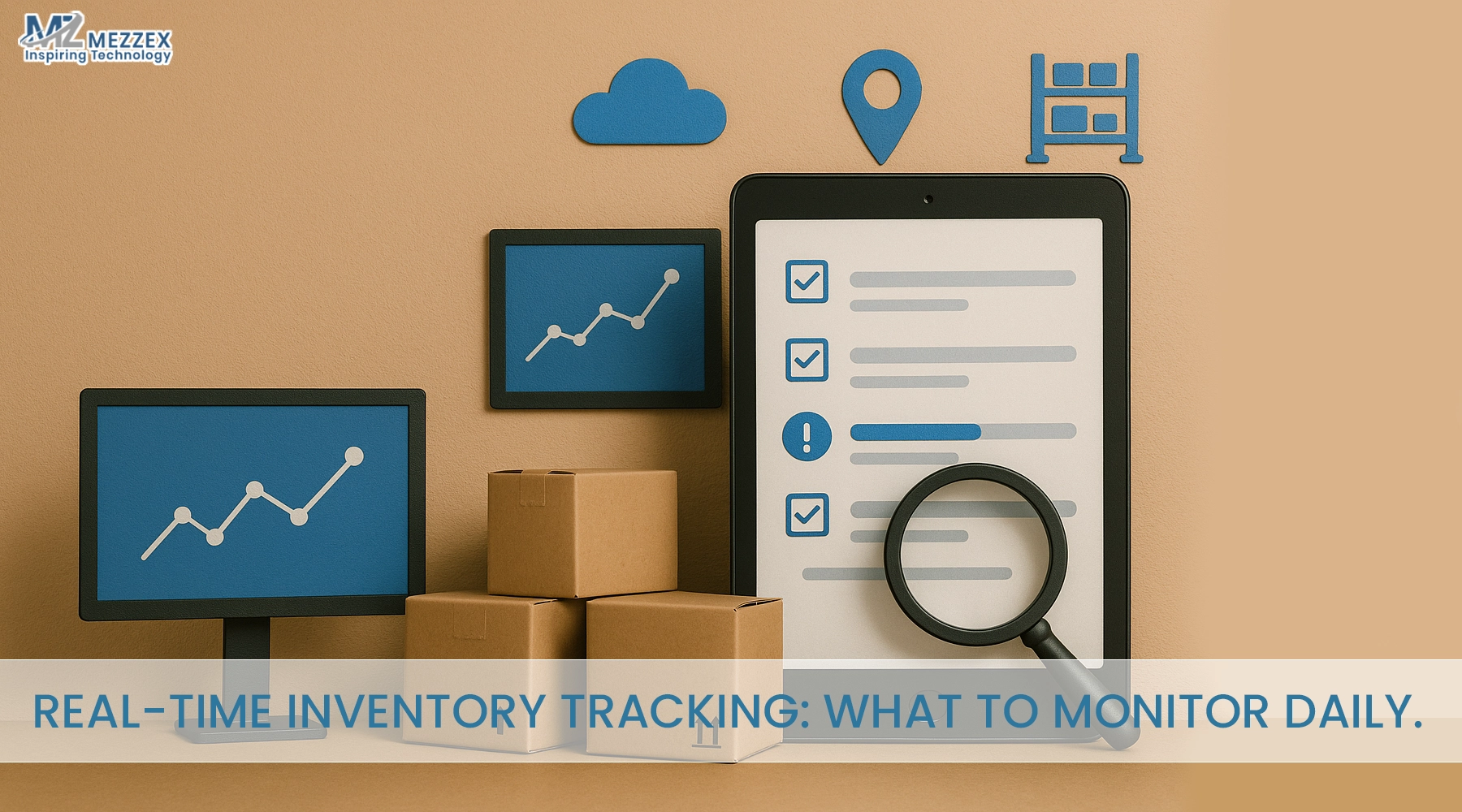
- Mezzex configures dashboards and alerts that show stock sync status, failed updates, API limits, and channel‑level issues in one view for your operations or ecommerce team.
- The team reviews performance and recommends changes to sync frequency, safety stock rules, or listing strategy to cut overselling, reduce cancellations, and protect margin.
Metrics and checks for healthy multi‑channel inventory
- Oversell and cancellation rate by channel
Track cancellations due to “out of stock” on Amazon, eBay, and your web store. A strong multi‑platform stock sync setup pushes this rate towards zero, even during peak campaigns.
- Stock accuracy between the system and the warehouse
Run cycle counts or full counts and compare physical numbers with your central inventory. Large gaps in signal processing or integration issues that no software alone can fix.
- Time to update across channels
Measure how long it takes for a confirmed sale on one platform to show as a reduced quantity on the others. Shorter windows mean less risk and smoother flash sales or promotions.
- Sell‑through and aged stock by channel
Use unified data to see how fast each SKU sells on Amazon, eBay, and your site, then adjust purchasing, pricing, and promotion by channel to avoid dead stock and missed demand.
- Team time spent on manual fixes
Track hours spent on CSV work, manual listing edits, and stock corrections. Effective multi‑platform stock sync should reduce this and free your team to focus on growth tasks like new products and campaigns.
Plan your multi‑platform stock sync with Mezzex
Multi‑channel ecommerce only works when your inventory keeps up with your customers. A robust multi‑platform stock sync strategy across Amazon, eBay, and your web store protects account health, margins, and customer trust. Mezzex helps UK sellers design and implement the right sync architecture, from central inventory layers and marketplace APIs to product listing automation and performance dashboards. Take the next step now: call us at +44 121 661 6357 or email info@mezzex.com to schedule a consultation about your multi‑channel inventory strategy.