Ecommerce-services
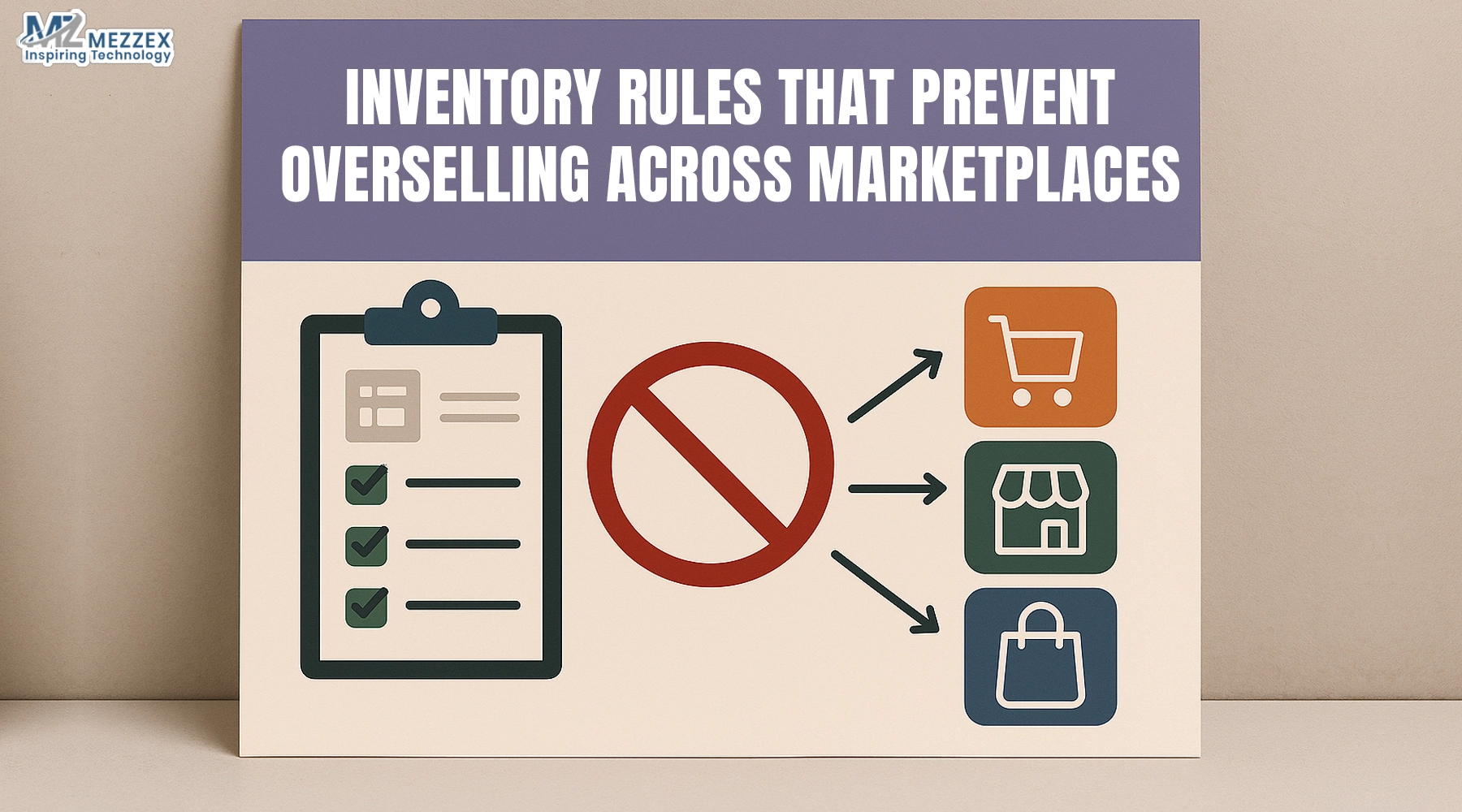
6 Inventory Rules That Prevent Overselling Across Marketplaces
Overselling kills ratings, triggers cancellations, and risks account health on Amazon, eBay, and your own store. A clean control system stops the spiral before peak. This guide lays out six inventory rules that prevent overselling across marketplaces and keep listings accurate in real time. You set one source of truth, sync events in minutes, hold a safety buffer, and enforce strict out‑of‑stock and backorder controls. You map bundles correctly, deduct components once, and automate reorder points before you run dry. Use these rules to protect the Buy Box, keep cancellation rates low, and ship on time during campaigns and growth.
1. Single source of truth with real‑time sync
- Select one system of record for inventory; map every SKU, variant, bundle, and kit to this source.
- Push stock deltas after every order, cancellation, return, and restock; avoid batch‑only syncs for fast movers.
- Use API‑based integrations for Amazon and eBay; replace CSV/FTP updates on high‑velocity items.
- Log every change with user, time, channel, and quantity to support audits and root‑cause fixes.
2. Safety buffers and per‑channel show‑quantities
- Hold a safety buffer (5–15%) that never lists; adjust by sales velocity, supplier lead time, and campaign risk.
- Limit displayed quantity per channel (e.g., show 2–5 units) to throttle demand spikes during sync windows.
- Set channel‑specific min/max rules; keep a higher buffer on slower integrations or risky categories.
- Review buffers weekly and tighten before promotions or seasonal peaks.
3. SKU mapping, bundles, and kit deductions
- Standardise SKU naming and variant options; keep parent/child relationships identical across channels.
- Deduct bundle components at order time from the source system; block kit sales when any component hits the buffer.
- Disallow manual kit edits inside marketplace UIs to prevent desync and double‑count.
- For multipacks, define pack‑to‑unit ratios and enforce consistent deductions across all channels.
4. Post all order/return/cancel events in minutes
- Write orders, returns, and cancellations back to the source within 1–2 minutes to protect accuracy.
- Re‑expose only good stock after QC; quarantine damaged returns and mark them non‑sellable.
- Auto‑reconcile mismatches nightly; surface SKUs with repeat deltas for manual review.
- Set alerts when event posting exceeds SLA so ops can intervene fast.
5. Auto‑unlist at buffer; strict backorder and preorder rules
- Auto‑unlist when available units reach the buffer threshold; never keep listings live at effective zero.
- Disable backorders unless you show an SLA/ETA and ring‑fence inbound POs; avoid silent backorders.
- For preorders, cap sellable quantity by confirmed PO and inbound schedule; show conservative dates.
- Re‑list only after physical receipt or ASN confirmation meets the SLA.
6. Forecasting, reorder points, and cycle counts
- Set reorder points per SKU based on velocity, seasonality, and supplier SLA; automate PO triggers.
- Run weekly cycle counts on A‑class SKUs; monthly counts on B/C classes; fix variances >1% the same day.
- Add a campaign factor to reorder points before ads and peak; review daily during promotions.
- Track stockouts and oversells as incidents; adjust buffers, sync intervals, or lead‑time assumptions.
Seller performance and account health safeguards
- Keep late dispatch and cancellation rates below marketplace thresholds by removing risky listings early.
- Set alerts for low stock on bestsellers; route to priority pick and replenishment.
- Protect feedback and Buy Box by keeping price and stock in sync during ads and coupons.
- Document playbooks for OOS handling, buyer messaging, and partial fulfilment rules.
Data hygiene that prevents silent errors
- Enforce unique SKUs; remove duplicates and legacy IDs that cause mis‑maps.
- Lock attribute schemas for variants (size/colour) and audit monthly for drift.
- Require a two‑person review on bulk imports and channel mapping changes.
- Version control inventory rules and keep rollback steps for integrations.
Get In Touch
Stabilise your multichannel operations now. Mezzex implements the six inventory rules end-to-end: single source of truth, near real‑time event sync, safety buffers with per‑channel show‑quantities, strict OOS/backorder controls, accurate bundle deductions, and forecasting with cycle counts. Get an inventory health audit, sync‑latency measurement, and a rollout plan with dashboards, alerts, and SLAs for Amazon, eBay, and your store. Call us at +44 121 661 6357 or email us at [email protected] to get in touch with one of our e‑commerce specialists to cut cancellations, protect ratings, and secure the Buy Box before peak.